11 May 2016
Hilly Clinton
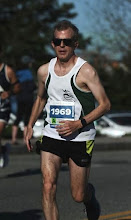
No, it’s not a political statement, it’s just an annual tradition that this year turned out rather politically pun-worthy (don’t we drop Rs in New England?). If it’s May, it’s time for the Hill From Hell, or really, the collection of hills ranging from purgatory to hell that comprise the Clinton Tribute.
I return to this race because it’s on our local club racing circuit, which isn’t really a good excuse because I tend to miss most of the races on that circuit anyway. I return to this race because the local paper that organizes it actually has a habit of reporting on the racing aspect of the event – a rarity when media outlets usually only speak of the charity seeking funds. I return to this race because it’s a fun townie event, even if it’s for a town that isn’t my own. But mostly I return to this race because it’s one of the toughest five milers in the Commonwealth, and let’s face it, I love pain.
Four hills in five miles, with only the first ranking below the level of ugly, and that one begins at the starting line to really get your circuits humming. It also has the convenient effect of tuckering out the townie tots by the top. I love the fact that the kids turn out in force for this – it’s good for the future. I’m annually amused by the irrationally exuberant few who always insist on having their moment in the sun, or in the case of this year, the gloom, by leading the pack for the first two blocks of elevation gain. Then they die. Then the real fun begins. This year was no exception.
Clinton comes around three weeks after Boston, just when the legs are just starting to feel human again, so why not insult them with a little vertical racing? This year brought an added twist: it came in the middle of what technically should be yet another taper, because yes, I’m embarking on a lark of spring foolishness by running a second marathon within four weeks, the “Boston-Sugarloaf Double” as I’ve heard it referenced. Three weeks and six days post Beantown (as it was on a Monday), or in other words, a mere week after Clinton, I’ll be slicing through the wilds of Maine, doing it again. Why, you ask? Good question, but we’ll leave that pontificating until a future episode. Suffice to say that while I intended to race Clinton, I didn’t intend to blow out anything along the way – neither times nor bodily parts. Preservation was a specified goal.
I recently had the fun of mentioning to a local reporter that the fun of being old is that you can enjoy it when you beat the young guys, yet have a good excuse when you don’t. That being said, my only real goal in this one was to beat the really old guys and go home with another of the absurdly oversized trophies this race bestows, because I have such an excess of flat spaces needing to be filled in my basement office. That outcome would come to pass, though not for lack of really old guys vying for small town glory. In fact, though the overall field was somewhat thinner than usual, there was a plethora of us relics. In a statistical oddity that happens only in small town races, five really old guys – seniors in their fifties like me – would cross the line before the first of the moderately old guys – masters in their forties – made it home. This day, the really old farts ruled.
That thin field also boosted the surprise of the day, my best placing in four outings at this venue. Lining up on the inexplicably narrow starting line timing mat (only ten feet wide, while the field was lined up across the entire wide street), no obvious players were in sight save my friend John. He noticed it, too. But never knowing who might be the wolf in sheep’s clothing, or for that matter who might be in earshot, we kept our whispers low as I suggested that this one could be his; my presumption being that though it’s happened on rare occasions, I had no expectation of landing in front of him that day. He agreed, he went for it, he was never challenged, and he won it. Well done. I’d roll in behind him in second place, but forty-two seconds back, an eternity. It wasn’t close. And though John was lonely throughout, getting to my spot involved a little more work.
Once the youth had gone hari-kari by the top of the starting grade, I slipped to the inside of an early competitor on the first turn, edged into third, and the game was on. John had already opened a sizeable lead, and though I knew he sometimes had a tendency to fade late, he gave no hints that that was the cards on this day. The guy in second also looked strong and was opening it up so quickly that once we’d plunged down the first drop to the mile mark, the gap probably exceeded sixty yards. Rationalization set in quickly: another marathon in a week, don’t break anything, third still smells pretty good.
Change set in just as quickly. Barely a quarter mile later, when the course turned vertical again, Number Two’s strength showed its softer side. By the top of that second hill, as we made the turn onto the only significant flat stretch of the course, I’d rapidly shrunk the gap to mere feet. Bag rationalization, go for strategy. It was clear this guy beat me up on the down, but I guessed I could wear him down on the up. And ups we had a’plenty. The Hill From Hell loomed.
I crept past on the flat, turning Number Two into Number Three, peppering our brief meeting with a little chit-chat, establishing he was local and well aware of our looming trip to Hell. So while I had perhaps ten yards on him entering Hades, I had no element of surprise. Holding second would require hammering hell hard. Up we go, kids. And may I say, it didn’t escape me that the sponsorship sign on the three mile marker, halfway up the Hill From Hell, was courtesy of a funeral home. Nice touch, Clinton, nice touch.
Somewhere from the depth of my memory that’s incapable of recalling what I did on Tuesday, I recognized a tree that I knew to mark the top, and gave it a burst over the summit, not having any idea how successful I’d been at opening the gap. I needed it to be large enough to hold on through my weak zone – the obscene screaming descent ahead. That drop starts in earnest before the course takes a one-eighty, a tough enough maneuver on the flats, but far worse when trying to wring everything out of the downgrade. Still, in exchange for that highly inefficient swinging turn, it offers the benefit of seeing how far behind your rivals may be.
Did I mention that change sets in quickly? My plan, concocted only minutes earlier, was to open it up on Number Three enough to hold him off through the plunge, knowing that if things got tight, the fourth and final hill should give me a last chance to cement my spot. But my post-hairpin glance back up the hill revealed a surprise: Number Three was now Number Four; the new Three was none other than a club-mate and occasional training partner from virtually next door (OK, down the street) whom I knew was a killer on the hills.
Crap. Now that fourth hill insurance policy meant nothing. My plan was kaput.
Forgetting about the ‘don’t break anything’ directive, it was all-out on the dive, all-out on the last climb, and the full Death Warmed Over look crossing the finish, turning the last mile – which to be fair included the second half of the Killer Plunge but also that final insulting dead-legged climb – into by far the fastest of the day. A little number crunching would reveal that the drop in my last mile split, compared to my average for the first four, would exactly equal the seventeen seconds that separated me from my club-mate. Go figure.
OK, so maybe John won it easily, but I’d say my race was a bit more interesting. Perhaps even more fun.
Then again, it was worth asking, this was a taper?
Amazing Department: A new award was created this year. The Ed Powers Award will be given each year to the oldest finisher. It was named after its first recipient, Ed Powers, who at age NINETY completed Hilly Clinton in sixty six minutes at thirteen minute pace, before hopping almost spryly to the stage to collect his honor. And consider, nine people finished behind him.
08 May 2016
Boston Insecurity
[ Ed note: This has been bouncing around my desk, mostly finished, for two weeks. I hadn’t published it because, frankly, it’s too long, and I wanted to cut it down. Today I say, “So what?” It’s got to be said, so invest an additional three minutes and ponder… ]
The third post-bombing Boston Marathon has come and gone, thankfully incident-free. This could be due to the sheer unlikelihood of another attack; after all, even after that horrific day we were only one-for one hundred and seventeen, and hopefully those odds or better will carry on long into the future unscathed. Or it could be due to enhanced security enacted since that day acting as a deterrent, or, in fact, having broken pending plots which were not (perhaps rightfully) made known to the public. I’m not in a position to say.
I am in a position to say that while many facets of that enhanced security enacted after 2013 made sense and continue to do so, others never did and still don’t. Further, gaps still remain. Long-time readers of this column know that I’ve been vocal in my reactions to Boston’s security enhancements, and while it might sound a bit repetitious, I’m revisiting the topic. I’m of the view that acceptance is the wrong path; continued attention should be drawn to areas that need improvement. Humor me while I relate previous statements to this year’s reality on the ground.
Let’s put the positives on the table. Some changes made sense. Increased security presence, both uniformed and plain-clothed, among the crowds at busy places is the obvious right thing to do. Nothing tops human intelligence or the knack of a trained, vigilant person to detect something awry. Increased video surveillance is an obvious plus. And asking those in the crowd not to bring items that might raise suspicion is fair game. Overflights with detection equipment that enhance the ability to find things that shouldn’t be happening are a good use of technology to increase safety. This year an aerial radiation scan was done before the race to establish a baseline against which any unusual emissions could later be measured. Smart. Human eyes in the sky and more perched on buildings, some even armed, provide real security and the ability to respond in a crisis.
So far none of these actions touched the runners. But some must, and that’s perfectly acceptable. The chief sensible change is a reasonable check of runners entering the Athlete’s Village (or for practical reasons, as they board the buses to the Village). We like to think of runners as good folk, but we shouldn’t assume that out of thirty thousand people there won’t be a few imbalanced ones, and there’s no reason not to take action to assure that one of them doesn’t see a field of people at the village as a rich field of sitting ducks. Scanning runners on the way in won’t entirely eliminate the ability of someone to sneak in via an alternate path, but it’s a reasonable thing to do.
Further, it’s not off-base to limit the runners from brining certain things to the Athlete’s Village and the race. Big costumes that can easily conceal nasty things? OK, I’m with that, they’re not needed in a race. Weight vests? Absolutely. Let’s face it, they resemble things that go boom in certain parts of the world, and again are not needed in a race. If you want to challenge yourself by piling on an extra fifty pounds, do it in your training run – there is no “Weight Enhanced” award category at Boston or any other race I’m aware of.
But we now cross the line from the positives to the areas that still need improvement. I’ll focus on four: two that I’ve harped on before, and two that have become apparent in recent years.
First, the harping: While it’s not off-base to limit runners from bringing things that aren’t needed for the race, it certainly is off-based to limit runners from bringing things that are needed. The current rule is that you can bring only what you can wear. On a warm sunny day, this works. On an ugly wet day, it’s entirely unclear if you can even bring a pair of dry shoes in a plastic bag (I tried to get clarity on this from the BAA in 2014 without success). And if the weather is uncertain when you depart your home or hotel, you’ll have to guess on the proper race attire and hope you’re right, because you can no longer check a bag at the Athlete’s Village with items you don’t need for the race, or, for that matter, items you do need at the finish. I don’t mind tossing “rental clothing” in the donation bin before the race (this year’s shopping for that stuff was rather fun), but I’m not willing to toss away good racing jerseys and clothing should the weather change. Limiting runners from selecting what they need at race time has the potential to impact their race performance. And on a seriously hypothermic day like we had last year, not being able to send dry clothing to the finish exposes runners to entirely unnecessary discomfort and potentially serious risk.
I’m fortunate to have a club willing to carry a bag of dry clothing into the city for me, and many have friends or families able to perform this task. But many do not, and the BAA has eliminated this nearly universal marathon courtesy. They do provide a bag check – but only if you can get to the Boston Common early in the morning. This is entirely impractical for anyone living or staying near the starting line or further west. And even for those who can take advantage of this limited service, while it can provide dry togs at the far end, it doesn’t solve the game-time gear decision problem.
How, I ask, does the elimination of the bag check in Hopkinton enhance security? Since they still run a baggage check, the risk of nefarious cargo still exists, and there are still queues of people arriving to check bags and pass the pre-bus security scan. As we were reminded after the attacks at the Brussels airport, which occurred outside of the secure area, mayhem can be perpetrated outside the security perimeter just as effectively as inside. You cannot eliminate the perimeter.
Perhaps the thinking is that this reduces the amount of material coming into the Village? But can’t a reasonable balance be struck? It’s enlightening to look elsewhere for comparison. The New York City Marathon tried eliminating the Athlete’s Village baggage check entirely in 2012. As this was before the Boston bombings, their intent appeared to be logistical convenience rather than security. But in the face of massive protest, they reversed their decision. Today, they offer the choice of either bag check service or, if you opt not to use it, an enhanced poncho at the finish to try to stave off hypothermia (noting that Boston’s enhanced heat sheet paled compared to New York’s version, and failed utterly in last year’s post-race nastiness). But here’s the kick: In New York, even if you opt not to check a bag, you’re still allowed to bring the clear checked baggage bag they provide to the village with your dry shoes or other gear. It’s not a big bag. You are limited in volume. But you can bring what you need.
Boston’s only softening this year was to allow a gallon-sized clear plastic bag for food items. It was a nice gesture, as I’ve known people who have had Dunkin’ Donuts muffins taken because they were in (gasp!) Dunkin’ bags. Until this change, no bags were allowed, save fanny packs (that weird oddity for all the competitive Boston athletes who race with fanny packs?). Even this softening, however, was applied with no leniency for reason.
This year, I left home with the clothes on my back and little else. Besides hand carrying my fuel belt (allowed, though nobody looked inside the pockets for contraband), I stuffed my pockets with a pre-race gel, a baggie of sunscreen, that ever-critical wide-mouthed bottle, and my starting line final layer of warmth and privacy, my rolled up black garbage bag. So equipped, I would have experienced nothing more than a two-second waving of a metal detector wand across my body. But at the last moment I decided it was likely that the garbage bag and the bottle might pop out of my pockets on the bus, so I grabbed a plastic grocery bag and popped those four items inside.
You can guess where this goes. I was stopped at security. The bag (which to be fair wasn’t clear, but off-white) was not allowed. Never mind that there were only four small items in it, items which I removed in front of the security staff and jammed back in my pockets without any staff examination. Never mind that one of the items was itself a bag! They took my grocery bag and sent me on.
This is silly. Search my stuff, I’m fine with that, but search it well; make it credible, not meaningless. But also be reasonable. Follow New York’s lead. Allow me to bring the bag check bag you gave me at the expo. Better yet, let me to check it. In short, stop getting in the way of my race.
Yet despite all of these things that the BAA does, what has become apparent in the last two years are the things they do not do. And that is making reasonable attempts to halt fraudulent runners, who enter the race using counterfeit bibs or fraudulent qualifying times.
After 2013, the time-honored tradition of running as a bandit was banned. The validity of that decision is a different discussion, but it suffices to say it upped the ante for people trying to run Boston without a valid qualifying time (or charity or club entry). The result has been an upsurge of counterfeit bibs and falsified qualifying times. One could say that this too is an entirely different discussion, but when security is paramount, it becomes important to know who you’re shuffling into the corrals. While, as noted, it’s entirely possible that one of thirty-thousand officially registered runners could be an unbalanced danger, it’s far more likely that someone trying to impart havoc will seek to gain entry without enduring the training and pain of actually qualifying for the race.
Thus, while the second item on the list – those running with falsified qualifying times – is the more vexing problem, it’s also the lesser of concerns when the question is security. Someone who has registered based on a fraudulent qualifying time is a cheater worthy of disqualification, derision, prosecution, and perhaps flogging. But when they pick up their bibs, they must show photo ID to prove (within the limits of what a race can police) they are who they say they are.
Catching their cheating becomes a post-event forensic exercise. The running community has responded with creative solutions. As an example, enterprising individuals have devised ways to filter results which are vastly different from qualifying times. Such discrepancies don’t always mean fraud; after all, everyone has bad days, but they do winnow out suspicious results. Social media has been abuzz with cases where such techniques have led to investigations of qualifying races, where examination of photos and timing mat data have found hired guns running qualifiers as well as course-cutting and other forms of outright cheating. These retroactive solutions don’t stop cheaters from running the race before they’re caught. But it would serve the BAA well to partner with these resources to turn the unregulated and error-prone court of the Internet into hard cases and publicly take action. The BAA needs to make some noise, prosecute a few for fraud, and make it known that they won’t stand for it.
That other item on the list, fake bibs, while equally rage-inspiring to truly qualified runners, is the far bigger issue so far as security is concerned, because it means that people who are entirely unknown to race officials are in the Village and on the course (and of course, stealing services and medals). Paradoxically, this is by far the easier one to solve.
There’s a chip on the back of a real bib. Use it.
The BAA goes to lengths to tell people not to post pictures of their bibs on social media in order to avoid having them copied. The BAA threatens people who have their bibs copied assuming that they must have been complicit – a fair act when directed at those who knowingly copy and sell bibs, but what also amounts to going after the victim of identity fraud rather than the perpetrator. Yet again this year, people found themselves numerically replicated when they pulled up their pictures on OverpricedRaceFoto.com. Wailing and lamentation was heard throughout the land! How could this have happened?
Let’s face it. A Boston bib – or most any race bib – is easy to fake. We’re not talking about finely detailed scrollwork and inscriptions like those on our currency. We’re talking about a bunch of big numbers and an Adidas logo on a colored background. Once you see one, you can create one that’s good enough to pass quick visual muster, on just about any computer, and you can put any number you want on it (which blows out the ‘prosecute the victim’ logic) in a few minutes. Print it on a color printer, on Tyvek if you want to be fancy, pin it on, and you’re off to the race.
Except that you have no chip.
I’m not going to say that the chip can’t be faked. In a world where just about anything else can be faked, so can a chip. But this would be a lot tougher, and it would easily thwart the typical counterfeiter. It helps to realize that each chip can be encoded not just with the bib number, but with a unique ID that would only tie to the actual bib number inside of the BAA’s database.
The rest is simple. While security is busy confiscating your four-items-or-less grocery bag, they can also be looking at the computer screen attached to the chip scanner stationed at the entry point. How easy is this? Easy enough so that at the New Bedford Half Marathon, chip scanners and monitors were set up both at the end of the finish chute and in the gym so that just by being in range, my name and results popped up instantly. How hard would it be for Boston security to set this up and assure that the number printed on your bib is real, because the chip reports your bib, name, and hey, if you want to get really over-the-top sophisticated, even a photo? But at remote locations? Hey, I can get a credit-card striper that works on my cell phone. Trust me, this is easy.
By taking this simple step, you’ll knock off the bulk of the fake bibs before those people board the buses to the Village. As a nice touch, have a few beefy guys handy to hustle the cheaters off for fraud prosecution. And while I won’t advocate a police state, heck, put a second station between the finish line and the medals and goodies chute to weed out those who jump in. Maybe they got to run, but you don’t have to give ‘em a medal.
None of these suggestions are perfect and they’ll never catch everyone, but if the BAA is serious about security, they’re easy and common sense answers that will enhance, not degrade, the runners’ experience. Do the smart stuff. And then get out of the way to let us run our peak race, properly equipped both for the race and afterward..
[ Ed. note: I told you this was too long. If you have read this far, kindly post a comment to humor me. And thanks for your time. ]
27 April 2016
Bad Math
This was a war of attrition, and I knew it early on. By mid-race, I had already fallen into a mantra, seconds for miles, seconds for miles, seconds for miles. If that makes no sense, realize that’s not exactly what I was grunting to myself, just the template. I was in math survival mode early on: how many seconds I had in the bank to be spread over how many miles remaining, all with the aim of slipping down Boylston Street with another coveted two-colon-anything Boston finishing time.
At my stride cadence of about one-eighty, a breath per three strides (yes, after enough miles and with a high enough OCD rating, you figure this out), dropping each numeric value into two breaths, grunting out the status like, “Sixty…Nine…For-Two…Point-Two”, I’d remind myself about fifteen times a minute where I stood. Would I ever be able to mail it in? Or, more likely, how much margin of error did I have to just squeak it out?
At twenty four, it looked good. My example above was real: Sixty-nine for two-point-two. That sixty-nine seconds I had in the bank was down from somewhere north of one-eighty, but even after the hills had taken their inevitable toll, well, sixty-nine was pretty healthy. Give the nine to the last point two of a mile, the precise math on that part being more than my overheated brain cared to deal with, and with sixty left over that’d be a generous buffer of thirty seconds per mile, or the hint that holding seven-twenties would bring me home with a few seconds to spare.
But just a few minutes later, at twenty-five-point-two, when the cowbells clang gloriously and incessantly and someone perpetually announces, “One mile to go!” my watch inexplicably decreed that I had nothing in the bank. Zilch. Zip. Zero. Say what? If nothing else, I’m usually pretty accurate on mental timekeeping. This was a mark on me. How’d I screw that one up?
Resigned to a fully respectable but never as satisfying three-colon-very-little, I grunted my way through the Mass Ave underpass, that moment when you realize that spending five hours in brilliant sun does indeed make you a bit snow-blind, resulting in a dozen seconds of seemingly pitch-black terror, hoping the course repair crews haven’t left any cracks or potholes, then climbed back into the sun, heaved my way up the final grade of Hereford Street and, on hitting Boylston for that final stretch, cursed myself because in ten official races, I’ve yet to commit to memory the actual distance from that last turn to the finish. A glance at my watch hinted that perhaps my earlier screw-up had itself been a screw-up, and perhaps I still had time to reclaim a spot in the land of sub-three. I cranked up the closest thing I could muster to a kick – which really didn’t resemble a kick in any sense of the word – and made for those distant finish line arches.
I didn’t make it in time. Eighteen seconds separated me from another notch in the two column. My math had failed me. Friends would later console me on the near miss, but it wasn’t even my closest near-miss – that one came five years back when the gap was only seven seconds. But really, I didn’t care. Given the day it was – a day described by one of my fellow race-day journalers as “sneaky hot”, a day not nearly so bad as the 2012 Bake-Fest but, similar to that year, a day when most of my compatriots saw ten, twenty, or even more minutes added to their expectations, three-colon-very-little was just fine with me.
You know you’re in for a tough one when you’re sweating while standing still in the starting corral. The forecasted low sixties start clearly felt closer to seventy before the party started, and with nary a cloud in the sky, and the New England early spring providing no foliage and no shade, ol’ sol had a field day. Seven layers of sunscreen (hey, I just kept slathering it every time it was offered!) kept the red out, but of course did nothing against the baking action. Within a few miles, I was cranking through bodily hydration at an alarming rate.
The forecast promised relief by the time we arrived in Boston, but as is often the case in life, be careful what you wish for. Cooling winds, which typically pick up as you top the hills in Newton, came early and made their presence known by downtown Wellesley. The heat abated, only to be replaced by a stiff headwind that seemed immune to the usual shielding thickness of Boston’s crowded field, somehow always catching me with an unlikely gap between myself and the next nearest tall person. But insidiously worse, like a desert zephyr, that wind carried a drying power far in excess of expectations, sucking moisture from all with dangerous efficiency. Having already enacted my heat strategy of head dousing at each water table, I’d find my hair already dry within a half-mile of each soaking. Only the geeky headband kept some cooling moisture in place.
As expected, all of this added up to a typical slow fade, though playing the experience card helped keep things under control, limiting that fade to an extra minute tacked onto each subsequent ten kilometers. While the desiccating power of the wind was unexpected, I return to my opening statement: This was a war of attrition, and I knew it early on. So besides pulling out the heat management stops, it was a day for math early and math often to stay in the game.
What puzzles me still is where I went wrong. At the halfway point, my bank account seemed to match my split time; showing a healthy balance that held a decent chance of tiding me through the positive second-half split that’s almost inevitable even on a good day on Boston’s course. But from there? Like a forensic accountant, I’ve scrutinized the data. One error was obvious and amateur: I had three hour pace pegged incorrectly in my head by a second. That might not seem like much, but times twenty-six miles, well, you do the math. That accounts for twenty-four of those sixty-nine seconds I thought I had left with two-point-two to go. And mile twenty-five was no gem, making another withdrawal of another twenty-two seconds over three-hour pace. But even that should have left me with twenty-something to spare. Instead, I had nothing.
I’ll never know what went awry, and frankly, it doesn’t matter. Overall, it was a grand day with plenty of good moments that easily overrode the loss of a few minutes thanks to conditions that at least, unlike last year, didn’t threaten us all with hypothermia. And results need to be put into perspective. The local paper runs the results of all runners from the thirty or so towns in its coverage area (though this year they oddly omitted my own burg, burying it the next day in the cheap seats of the back section). The long listing – perhaps four hundred runners (I haven’t counted) – is heavily tilted toward the area’s high concentration of charity runners, so times are typically on the slower side, yet still the smattering of qualified, more competitive runners is easy to spot with a scan through the page. This year’s scan screamed, “Hot!” It’s telling that a mere eight sub-threes graced the page. It’s telling that my overall age-group placing rose from sixty-fourth last year to thirty-fourth this year, despite running over a minute slower, and my overall placing rose likewise. And it’s satisfying that somehow, like that year of the Bake-Fest, I fared fairly well under the sun, bad math and all. Rack it up, Boston number ten, we live to fight another day.
Fun Tidbits!
It’s A Small World, After All: (Shout out to Sis, who knows I HATE that song!) How, among thirty-thousand of your closest friends, do you run into so many people that you know? One: Like last year, I’d been on the bus to Hopkinton less than a minute this year when a companion, this time a fellow local Highland City runner, walked on. Cool! Company at the Athlete’s Village! Two: At the Village, I ran into a Maine runner from our New Year’s Day Boston Marathon run. Three: Leaving the village, it was a friend from the Carolinas whom I knew from the Buffalo Marathon and hadn’t seen in at least five years. Four: Near the corrals, it was a New York runner I’d met at Mohawk-Hudson last fall – when we’d realized we’d already met a year earlier on the trails in the Adirondacks. Five: At mile three, it was one of my new Central Mass Strider peeps, who joined forces with me for a whole bunch of miles. Six: In the finish chute, I turned around to find my training partner “The Brit” right behind me. And we even found his wife for a post-race picture! Seven: And leaving the finish area, yet another companion from that New Year’s run, a youngster who thanked me for the ridiculous amount of unsolicited advice I and another old guy had given him that morning in prep for his first Boston – which he nailed in an absurd two-forty-six. Way to go, Patrick! Eight: Were there more? Probably, my memory is only so good!
Number Ten! This was my tenth consecutive Boston Marathon, all run as a qualified entrant. Sadly, the days when ten years would grandfather you for life are long gone. Instead, as I understand it, I’m now granted early registration and exemption from the cut-off if my qualifying race barely squeaks in under the qualifying time. So far, I’m ahead of the qualifying standards by enough that neither of these offers a significant benefit, but there may come a time when I’ll be happy to have the bennies.
Welcoming The World: One of the things I love about Boston is the opportunity to welcome the world to my backyard. I love asking people where they’ve travelled from, and responding to their reciprocal request by saying, “Ten miles north of here.” I love being able to offer up course advice to those who’ve never seen the route. And I love hearing runners’ reactions to the course and their experience. This year’s top moment in that category came around the half-mile mark, a favorite spot of mine where you first get a glimpse ahead and can see the endless mass of humanity ahead of you, even when you start near the front of the field. The guy behind me let out a loud, southern, and genuine, “DANG!” I knew instantly what he meant.
Post-Race Peeps: A huge shout-out and thank-you to my peeps from the Squannacook River Runners who again threw a terrific post-race party! I always feel a bit guilty knowing that while I’m a member, my distance from their home turf makes my participation in their events sporadic at best. And yet they welcome me back every year! You are truly good folk, even if you did catch me stuffing my face shamelessly! (Better is the shot of the Squannie finishers trying to break the massage table!) Dropping in to help out at your Groton Road Race is the least I can do to say thanks!
New Team: Goodbye Greater Boston red, hello Central Mass Striders blue. The irony is that had I raced in red, I’d have finished second on their masters team and would have again enjoyed seeing my name in the team section of the results book for their fifteenth place finish. Racing in blue, I ranked only fourth for CMS, about a minute outside of the scoring top three, and lost out on that tiny (and I mean tiny) bit of ink. But the non-scoring members of a team are there if someone flags, an important mission, and that support was provided to a far better sixth place finish. Top ten. Cool.
Ink. Sort of. Speaking of ink, the local press sent over a reporter and photographer a few weeks before the race for their series of profiles on runners with the longest streak in each town. These guys did fine work, penning an enjoyable article and managing to snap shots that made even me look pretty good. Plus, they even managed to get the blog title into their piece! But oddly, the article never appeared in the daily rag. It did show up in the weekly edition (which few read) where it was printed rather larger than life (must have been a slow ad day), but it didn’t appear on their web site until after the race. Go figure. But enjoy it here.
And Finally, Abuse of the Cloth: Admittedly, this story is a bit longer than a tidbit… Avoiding for the moment the issues of security and the lack of baggage checks, it’s a given that you’ll dispose of some clothing before the race. Since our local Salvation Army store closed up, Savers is now the purveyor of choice for “rental clothing” that gets used, tossed, reclaimed, and re-donated, probably to be back on the rack for your next race.
For four bucks each I scored a lovely Ohio State hoodie, an honor in light of my Ohio family heritage and the many OSU fans among the clan (though with the warmer temperatures, this one didn’t go to the race and lives on for another day!), and a pair of Florida State Seminoles sweatpants. I had my niece in mind on this second find, despite knowing she graduated from, and lives near, the University of Miami; hey, it was still Florida, right? Wrong, she informed me, this constituted treasonous behavior, cavorting with the enemy. In response, I promised to duly abuse them before discarding.
As it turned out, my gang settled on a patch of grass at the Athlete’s Village next to a gentleman who happened to be from Gainesville, Florida, or to translate to people who live in places with hills, a Gators fan. Yes, to him the ‘Noles, as apparently they’re known, were also the enemy. Gleefully he joined me as we rent the offending garment asunder before tacking on a few good stomps as a final insult, then slam dunked it into the nearest waste receptacle, all of this documented by club-mate Dan for the satisfaction of said Floridian niece. Yes, it was a bit wasteful, but hey, it was fun.
14 April 2016
Shunning Shelter
A couple of days after my last race, I was hit by a rather powerful metaphor. No injuries, I’m pleased to report, but it did make for a good lead-in to the tale of that outing.
Dearest Spouse has rightly given up trying to stuff freshly laundered (thanks of course to her) running wear into my overstuffed bureau drawers (which border on explosive failure due to years of race shirt accumulations and expo bargains). The Monday after said latest race, we were treated to half a foot of sticky April snow, which, glued to the roads as slush ice in the twenty-five degree air, made my trip home excruciatingly slow, and thus made the stack of short-sleeve running shirts and shorts she’d left me to stow all the more ironic. There were no cold-weather items in the mix; no long sleeves and no tights, because just three days earlier I was actually getting mosquito bites while chatting with a fellow runner after a warm afternoon rail trail run. The bugs were out, then back to winter. Go figure.
I’d say that’s just New England weather, but this year I’d be echoed with similar chants from just about everywhere. I’ll avoid going political this time and simply call it an observation. That day, having been out since morning and faced with dangerous dimly lit late day road slop, I did at least find the sanity to take a zero and chalk up a rest day of healing. I wasn’t quite so smart that previous weekend, though.
Mankind has spent millennia seeking better shelter and higher levels of comfort. Why is it that we find it so noble, so boast-worthy indeed, to forego these advances which not only make our lives more pleasant but clearly have worked to our advantage on the survival scale? Ah, simple question, simple answer: because we’re runners. Or morons. Or both.
Working backwards from our late season snow day (yes, Dearest Daughter the Younger had a snow day off from school in April), the previous day had been simply manic, starting with another white blanket, warming to melt the coating rapidly, and sucking me into the trap of a seemingly pleasant mid-afternoon run which instead turned into bone chilling squalls and brutal winds. And the day before that was merely hypothermic: rain, wind, and forty; my definition of miserably ugly (you are recalling at this point the short-sleeved laundry and mosquito bites?); or in other words, a perfect day for a race, provided it was reasonably short, and with ample shelter available thereafter. Fortunately, the Frank Nealon Boston Tune-Up met both of those criteria: at fifteen kilometers, not short by many folks’ standards, but not long enough to bring on serious exposure, and blessed by a toasty warm high school cafeteria base camp ringed by the elixir of the gods, hot soup.
To give you an idea of how attractive a day it was, two of my club-mates came to the race, looked at the weather, decided that since their target summer race in Quebec includes huge staircases, they elected to just stay indoors and run the school stairwells. Smart people, they, but the rest of us wandered out to prove to the world how much disdain we held for shelter, warmth, and comfort.
Having already decided I’d humor my local club critics and wear local club green for this one (no, they’re not serious critics, but I have taken on some good-natured ribbing for running a nearly local race in my racing club colors, rather than my local club colors, over the years), I’d forgotten that my local club shirt came from a generation back when tech shirts checked in with the thickness of light steel plate. Looking at the race photos, I’d guess to have been carrying an extra five pounds just in the shirt, stretching into an elasticized sail of numbing proportions. It’s a special feeling when your shorts are so glued to you that, well, need I really describe that part?
While sailing the Seven Seas of Upton may have been uncomfortable, conditions really weren’t too bad for racing; certainly overheating wasn’t a problem. And the results really weren’t that bad, either. On this, my sixth outing at this venue, I knocked a half a minute off last year’s finish, landed my second-best age-graded performance (within a point of my top rating from three years back), and once again took the seniors’ division crown. My random stranger warm-down companions were duly complimentary of my age-to-finishing-place ratio. Yet all in all it was unsatisfying. It felt poorly executed, too hard early, too much of a fight the rest of the way, too little at the end.
Upton is a reasonably challenging course, studded with rolling hills that always exceed my recollection of the previous year’s pain. Even splits aren’t a reasonable expectation. And to be fair, the race’s title, “Tune Up”, reflects the reality that this effort is only two weeks prior to the Big Show in Boston, so this race is, to my mind, the official start of the taper (not that I’ve ever been good at that maneuver). In short, blowing out everything isn’t a goal. But while an adrenalin-fueled quick first mile isn’t something to get uptight about, this time that quick first mile wasn’t really all that quick and it was followed by a progressive fade to moderately so-so at best, if not so-so by the actual splits, then so-so by feeling far less than All Powerful. Holding ninth at the mile, I’d lose six places, one of those with only a quarter mile to go, usually my time of strength, and regain only one for a fourteenth place overall finish. Not bad, but uninspiring.
But this was, after all, a tune-up, and if nothing else, it was a hard outing in a training cycle that‘s been fine on quantity but short on quality. I have to remind myself that age grading matters; the count of sun cycles does keep increasing. More so, I can’t expect to feel rocket-powered every day, so let’s get that day of struggle out of the way now before Patriot’s Day arrives.
Besides, how does that phrase go? A so-so day at the races beats…? And even a bunch of foolish drenched rats who have shunned modern comforts can be made happy with soup.
Photos courtesy of Ted Tyler via JimRhodes.com
31 March 2016
Coming Home
Thirty years ago, barely a year out of college, watching New England real estate prices spiral out of control, I somewhat wrongly concluded that if I didn’t get into the market soon, I might never be able to do so, and might be forced to abandon my Bay State beachhead for the more affordable environs of my Upstate New York homeland. Accordingly, I stretched my shaky finances to purchase my first home in a town north of Worcester. Now, in those pre-Internet days, you looked things up the old-fashioned way. It happened that my trusty paper atlas listed the population of said town at five thousand nine hundred and ninety nine. I had no idea how that number was arrived at, but since the place I bought was vacant, I always considered myself to be Resident Number Six Thousand, nicely completing the set in a way.
How, you ask, does this have anything to do with running, especially running as an old fart?
About four and a half years ago I received an email that changed the course of this human’s events. Shock and awe was a good description of my reaction when I was invited to run with the Greater Boston Track Club. Years of great adventures followed. Prior to that invitation, I had no idea that the National Club Cross Country Championships even existed, let along any concept that I’d be allowed in the door to toe the line in anything labelled National. GBTC put me in the ring with great opportunities, great people, and great times. But GBTC, while welcoming to us old folks, now has its heart focused on youthful talent. I hold no ill will over that; it is what it is. But I opted to seek out a team with focus on those with eyes that don’t necessarily focus so well anymore.
After a little shopping, I signed on this month with the Central Mass Striders racing team. Whereas GBTC is entirely a competitive club, CMS has a split personality, half (the large half) being a general purpose genial bunch of runners (who share many bonds with my hometown Highland City Striders), the other half comprising the competitive racing team. Like most area teams, its players come from a wide swath of New England, so I wasn’t deluding myself that I’d have a full team of fast guys to work out with on a regular basis. But CMS’ heart is indeed in based in Worcester, and a lot of the fun is indeed centered there. At heart, despite living between the much-more-recognizable metropolis of Boston and the second-city world of Worcester, I’ve always identified more with the latter. So frankly, signing on with CMS felt like coming home.
Now about that number six thousand thing: My introduction to CMS came in the form of an email from our team leader which, while incidentally introducing me to the group, was sent to list our teams for the upcoming Grand Prix series race, the New Bedford Half Marathon, which would be my first wearing the new colors. To score as a team, you need five runners. So imagine my delight when the list of our seniors was comprised of…five: four existing CMS guys, and me. Now as it turns out, there were in fact more CMS seniors than appeared in that email. But I wouldn’t know that till after the race. So far as I was concerned, I’d just put them over the top in having a full scoring senior team. I completed the set in a way. Kind of like moving into that new townhouse so many years ago, only better. Welcome home, you’re needed. Motivating, I’d say.
New Bedford arrived on one of those borderline days. A bit colder than comfortable without wearing the warm stuff, but not so cold that wearing warm stuff would be socially acceptable among the racing set. And windy, complicating the environmentals a bit more. On a day like that, it doesn’t matter how many times you’ve done it, you still can’t remember – or decide – the optimal combination of gear. I dithered. Layers? Shorts? Tights? Even shoes (I’ve amassed an odd assortment of racing shoes, yet none have truly lit my fire). I found myself traipsing back and forth between the parking garage and the YMCA (Race Central) numerous times before settling on a kit, when it occurred to me that in all this kerfuffle, I’d forgotten to leave my warm-up pants (certainly not a starting-line disposable item) at the car, resulting in yet another trot to the garage.
While all of this probably enhanced my warm-up, it left me trying to slip into the starting corral mere minutes before the gun, a risky move in a race this large. They’d shut down the option to enter the corral from the front, and we late-comers were directed around the block, bringing us to the chute – lined with an unbroken fence – far behind the starting line. We managed to squeeze through the fence, but I still needed to fight my way forward. New Bedford is a good-sized race – there would be about twenty-five hundred finishers that day – and team scoring is based on the gun, not net time, so every step behind the line can cost. By dumb luck I found myself in the shadow of one of my new teammates who made an excellent blocker, steering me to a reasonable balance between not being buried by the crowd and not being buried by the intensely competitive Grand Prix field. When the gun sounded, it was a mere twelve seconds to hit the course.
Did I mention this was New England Grand Prix? Of course I did, and though I’ve expounded on the seemingly unreal level of competition in Grand Prix events before, I need to expound on it again…because it’s unreal. At my advanced age, I don’t expect to be heading up the field in anything outside of a local romp, so it’s no surprise to see a solid stream of competitors ahead of me from the start. But let’s put this in perspective. By the time this thing ended, I’d be within about a minute of my all-time best, which, while it won’t win medals in Rio, isn’t too shabby (and of course there will be no half marathon in Rio, but I digress…). The day before, there had been another half marathon in Ashland, town number two on the Boston route. In that race of about five hundred, about a fifth the size of New Bedford, my time would have placed me ninth, in the top two percent (yes, different course, more hills, but less wind, a fair comparison). But at New Bedford, I rolled in at number two hundred and twelve. Yes, two hundred and eleven people ahead of me running what most would consider a smoking half, leaving me only in the top nine percent. So being about twelve seconds off the starting line was, frankly, entirely appropriate; any further forward and I might have become Flat Stanley.
I hit the mile in a split that could make me nervous, especially considering the traffic I’d fought and thus the extra effort it took to nail that time. And yet there was a sea of humanity in front of me. I picked off a few of them in the hills of miles two and three, traded with a few through the middle miles, and lost a few slots later, notably to a pod of a half-dozen or so and to The Brit, my training and travelling partner, who eclipsed me around seven just as the legendary late-course wind picked up. But from there, I’d only move up, picking off a few, one-by-one, through the late miles.
My brain wasn’t working well on pacing. For some reason my head kept measuring the remaining miles against a target of eleven, not thirteen, and I really had no bearing on what splits related to what finishing times. All I could mentally muster was to count seconds in the bank below an hour-thirty pace, since that’s half of three-hour marathon pace. Knowing I’d hoped to subdue that mark fairly significantly, it was comforting to know that my bank account was growing even in the tough windy miles; still, a little more brainpower could have gone a long way.
Instead, after mile eight’s momentary downwind letup, that brainpower was engaged in scanning for a moving wind block as we turned east and then north for the upwind ride along the white-capped sea. The block I found was moving slower than I’d have wished, but a little back-of-the-envelope cogitation told me I’d be better off slacking the next mile and getting half of it paid for than trying to fight it out solo. My unwitting target caught on quickly to the plan and turned witting, and we traded off air resistance abuse duty till things calmed down by coming ashore through the seawall gates. It was a bit of a Faustian bargain, but well worth it.
All that remained, other than about three miles, was the last hill I’d been warned of by so many. I’d done my homework, studied the course profile, and knew it wasn’t much – perhaps a hundred feet over nearly a mile. But I’d been told that in true Heartbreak style, it hit you at the end, mile twelve, when you’re toast. No study would answer the question short of the up-close-and-personal kind.
Rounding a bend, there it was. And? I laughed in its general direction. I offered it no respect. I began shouting – yes, shouting – to tell it, to tell those runners around me, to tell the world that you are not a hill. You are a mere bunny slope. And I proceeded to slay it, dropping my pace down to early race levels, mentally finding the power to drive right though it such that when the last turns arrived just before the finish, my form – at least to me – seemed utterly shot, all energy spent just at the right time (though the professional race photo that I actually paid for just to get a good shot in the new CMS Blue still looked pretty good). No point in leaving it on the course, right?
As a team, we didn’t win. We didn’t come close. Fifth place, in fact, and that twelve seconds delay to the start that I’d worried about had no consequence whatsoever. But our fifth would have been at least seventh without my grunting, wheezing roll across the line in a time that, on an age-graded basis, ranked as my best half, and slotted me a solid number two for the Boys in Blue. More importantly for me was the simple fact that we actually had a seniors team, a real-live full scoring team, a team that someone organized and made an effort to fill out. That was, in a word, cool. And motivating.
Welcome home.
Follow-Up Department: Yes, the clamshells arrived! Shell Number Six now stands in honor with its compatriots in the cluttered realm that is my office, my lair, and my lonely writer’s garret. Someday I must meet the artist, these things really are nicely done!
14 March 2016
Delayed Gratification
Wait for it…
Wait for it…
The clamshells have yet to arrive, though unlike the Eugene Half Marathon’s never fulfilled promise of award-by-mail delivery (you think I’ve forgotten?…think again!), I have faith that those prized hand-painted quahog trophies will arrive any day now. Victory Number Six is in the books, even if it took hours to discover that it wasn’t nearly as hard to notch as we’d anticipated and even if we – as yet – have nothing to show for it.
Winter in New England means it’s time to plod to Hyannis for the only thing that happens on the Cape between the Cape Cod Marathon and spring. Blown away by last year’s absurd concentration of blizzards, the Hyannis Festival of Oh So Many Events returned this year and broke out on a day oh-so-typical of this year’s Quasi-Winter, that is, it was barely winter at all. Brilliant sunshine and mild air made for a far more inviting than usual day to bask with over two dozen of my local club mates, though the weather’s racing-worthiness was another matter, sporting the fiercest winds I can recall in my six trips to the party. But wind or not, traditions must go on. And the real challenge, frankly, is how to tell the story of number six in a way that makes you, dear reader, want to relive this dream yet one more time.
So we’ll start with the differences, namely that this year’s Highland City Striders Masters team had little in common with any previous year’s team. There’s an old yarn about an eighties band who replaced their entire group during the course of a single tour (and of course I can’t recall who it was, but I’m sure you’ll all remind me). Certainly our team has undergone changes over the years, most notably with the tragic loss of Rocket John, but for five previous appearances, Captain Dan got the band back together, yours truly held the beat, and we filled in a couple more roadway musicians, usually for at least a span of a couple years each, to get that winning sound back each winter.
But this year Captain Dan answered a higher calling, abandoning his squad for the allure of finishing his sixth world majors marathon in Tokyo. Seriously? Tokyo over Hyannis in the winter? Admittedly he scored the bigger adventure, and I scored the temporary management of a team of…nobody. Not one returnee. Other than myself, starting from scratch. [Ed Note: Man Number Two doth protest said recollection and reminds me that Captain Dan did pursue him, so no, technically I wasn’t starting entirely from scratch. While Number Two did indeed have Hyannis experience, this was his initiation to the Men’s Masters team. PolitiFact would rate it “Mostly True” but certainly not “Pants on Fire”!] But how hard should it be to find three old guys in our ever-growing club? How about three reasonably fast old guys who would alleviate Captain Dan’s fear that we *gasp* might not retain our crown? How about three reasonably fast old guys whom I could convince really were reasonably fast?
The first part wasn’t hard. The second, only moderately (though alleviating Captain Dan’s fears was somewhat tougher). The third took some work. I’ll swear on your favorite book of faith that I plugged in only the estimated paces that my new teammates offered up themselves, but by race day you’d have thought I put them up to facing off against Galen Rupp. Clearly the weight of Captain Dan’s potential wrath bore down on them; the fear of his everlasting scorn should he return from the Land of the Rising Sun to learn that our streak was broken. As for me, I took the stance I take every year: if someone showed up who really wanted it, we’d have a rough go; if not, it’s clamshell time. Some years it’s been a contest. Others, not so much. This one, it would turn out, was one of those others, but it would take a while to figure that out.
Hanging at the exchange zone for my traditional third leg there didn’t seem to be many old dudes in sight, but appearances can be deceiving; I’d be pouring it onto the course and taking no chances. To my delight, our Number Two Man flew into the zone ahead of forecast in what I thought was – and kicked myself later for not being certain – a surprising fifth place. Not bad for our first two old guys, not bad at all. And nobody in front of them looked remotely old.
I’d conservatively plugged in my own forecast pace at twenty seconds slower per mile than my ten mile leg at Mill Cities back in December. Politics aside, conservatism can be a good thing. The wind, always present at Hyannis and almost always to the disadvantage of legs one and three, outdid itself. Save for about a mile and a half early on, this one was an epic battle against that one key element. And while it was nice to take the stick near the leaders, the lonely sparseness of the front offered no drafting opportunities. I picked off three relay teams and a bunch of full marathoners, handed off to Anchor Man Peter, and then realized I’d merely made my conservative pace – ironically within one second total over seven miles – yet feeling demolished as if I’d run a world record.
Remarkably, other than our Number Two, who, enjoying the downwind segment, clipped about a minute off his forecast, the rest of us had astoundingly accurate days like mine: Number One coming within eight seconds of plan, and Anchor Man, who’d been the most nervous about his prediction and his contribution to the team, arriving two seconds ahead of schedule. Consider: three of the four legs within eight seconds of forecast – not per mile but for the entire legs. Now if that ain’t planning, well…
We rolled in a few minutes shy of three hours, good enough to win it most years, but no guarantee. Anchor Man knew he’d lost one relay place (which would have put us third overall if my counting was right) but was fairly certain it wasn’t to an ancient. We thought we had title number six, but with the mayhem of multiple events, you just can’t be certain, and the team results always tend to be the last to arrive…so…
Wait for it…
Wait for it…
The first sign of trouble came when the race director called us up to verify we were, in fact, a masters team. That was odd, because he knows us. He’s awarded us clamshells many times before, and even noted our repetitive dominance when he’s called out our victories. For him, it turned out, this was just a sanity check, verifying that what he was seeing, what knew was wrong, was indeed wrong.
The second sign of trouble came when our phones buzzed with the automatic emailed results that put our team in fifth place overall and listed our age as zero – yep, zero. While I kicked myself for not counting more carefully at the exchange zone, I was pretty sure that fifth was highly unlikely.
Confirmation of trouble came minutes later, when said race director officially threw up his hands. Somehow every relay team was misclassified, every placing was mistaken, every division was just plain missed up (yes, that was intentional – to paraphrase Jeb!, please groan). Rather than trying to unsort the debris on the fly, he apologetically promised to ship our awards and offered up a generous “I’m sorry” bonus for next year. Though disappointing to ourselves and many other teams, I applauded his decision to get it right rather than get it fast.
Though we didn’t have assurance of the win, we were, admittedly, slightly presumptuous in posing for an imaginary clamshell picture – really, just imagine we’re holding them – but otherwise, we just had to…
Wait for it…
Wait for it…
…for only a brief few hours, till the wreckage was cleaned up and the truth was posted online by the evening. Yes, our counting was right, third overall – even amongst the young’uns – highly pleasing to a bunch of old farts. And yes, another masters division win for the home team, number six. The only surprise was our lack of competition. All that concern, all that angst, and the other team? (Yes, it turned out there were only two in our division – go figure.) Over an hour behind us.
Needless to say, we needn’t have worried, but you never know. And having to wait that much longer to find out made the result that much more pleasing. After all, instant gratification is for sprinters.
20 February 2016
The Unconventional View
Elvis has been in my head the last few days. Not that Elvis, but the other one, the important one, the Costello one, mostly as a result of the cool box set given by Dearest Spouse this Christmas. Specifically in the last few days it’s been The Angels Wanna’ Wear My Red Shoes, and as of Thursday, they’ve got ‘em. The bright red Puma Ignites, which served so well in the recent holiday season (nothing says Christmas better than cruising the city in that red winter running top, white gloves, Santa cap, and…yes, those bright red shoes) have been retired, relegated to that great shoe bin in the sky, where if the angels want ‘em, they can have ‘em, and yes, they can wear ‘em.
Angels can do that; they don’t get injured, but I do. So along with all the other things OCD that occupy my days, my mileage tracking spreadsheet, accounting for every workout for the last eleven years, automatically tracks the mileage on each pair of shoes. Five hundred miles and they’re out. It’s all about avoiding injury, staying healthy, staying alive, and it gets tougher every year. Worn shoes are just one of the risks in the twisted path we weave between the hazards of daily training when the body is of the age where many have given up on it.
It’s been a solid month since Yours Truly last checked in. I don’t burn your time when there isn’t excitement on the marquee. Certainly there have been plenty of odd topics, like this quasi-winter’s absurd weather (brought to you courtesy of the Climate Deniers of America), fun running events locally (often involving donuts, pizza, beer, guacamole, or a combination thereof) and in the running world in general (nothing beats a gang of running nerds gathered to watch the Olympic Trials marathon on a big screen – I love my people!), but primarily it’s been a Month of Sundays, a time to back off and work to get a bit healthier for the coming racing season. My version of backing off is, of course, a bit different from that of the general public.
A few days ago I received an invitation to from a writer seeking to pen a profile of a fifty-plus area athlete who’d met with reasonable competitive success. Admitting to resembling the profile, I sat down with Jan and her husband Peter. Jan, an athlete herself who has profiled athletes of far greater caliber than I (and with a book on childhood obesity to her name to boot cited by none other than Michelle Obama), combined with Peter, an exercise physiologist who’s seen the gamut of human activity levels from athlete to slug, to bring an interesting slant to our discussion. We chatted at length about the realities of staying active and fit while aging, and of the public’s perception of normal compared to that of an athlete.
All of this begs the question: What is normal? What is healthy? What should one’s goals realistically be when barreling headlong toward the mid-fifties (not there yet, but as Meg Ryan said of forty in When Harry Met Sally, “It’s out there!”)? You can listen to the conventional view, but I highly recommend against it. Then again, are my own expectations realistic?
The conventional view is a pathetic commercial pitching overpriced low-dose aspirin (you can buy the cheap generic ones and split them for about a tenth of the cost) where a fiftyish man jogs by and is then seen writhing on the ground having a heart attack. Pleasant. And what a message! Exercise will kill you, take a pill.
The conventional view is that during the recent snowstorm in Washington DC, a spokesman for the Prince George’s County Maryland Fire/EMS Department urged people over fifty and those with heart conditions to get someone else to do their snow shoveling. You’ve got a heart condition? That’s good advice. But you’re merely over fifty? Are you kidding? Pick up a shovel! But Peter (remember Peter, the exercise physiologist?) quickly inserted into the conversation the reality that ninety percent of the public does nothing to better their state of health. He sees the public, he would know. And if you haven’t picked up that shovel before, well, perhaps it might just kill you to do so when a blizzard has landed on your front lawn. But you’ve got to start somewhere, right?
The conventional view is this year’s edition of the Corporate Wellness Program, brought to you by Mighty Employer and Big Health Insurance Company, in a well-meaning but vain attempt to goad people into starting somewhere. I’ve opined on the absurdity of these programs before. Sure, I recognize the need, but the methods are ineffective and just plain silly. How silly? Well, I’m glad you asked, because this year’s redesigned program is worthy of a few pot shots, and in anticipation of taking those shots, I took a few screen shots. So let’s have some fun at the expense of naïve web copywriters, then get back to the topic at hand. Let’s get started!
Oh, I can’t wait. The excitement is killing me. Or perhaps it’s just lack of exercise? Or perhaps it’s the pages upon pages upon pages of blather that I must click through (the stress will kill me soon enough, or at least the carpal tunnel), and periodically I’m challenged with toughies like this one:
I’ve left out the fine print, but each of these is described in detail, and trust me, they’re not terribly challenging. My favorite is the last one, “Inconvenient path”, which suggests finding the longest possible route from your car, to the bathroom, and so on. Longest possible route? Gee, I hope my employer will support this, because I’d suggest getting to my office via the Appalachian Trail. Oh, but wait…the fine print…the challenge is for a mere five days. *sigh*
On we go on our journey. I started this column talking about injury prevention, so it was great to see the program try to educate me on the topic. And you know what? I go this one wrong!
Silly me. In my book, none of these are injuries. An injury means you broke something, tore something, well, you injured it. And not only are these not injuries, three out of four aren’t even common. I sure hope, other than in that pathetic aspirin commercial, heart attacks aren’t that common Just imagine, “In last weekend’s marathon, five thousand ran, six hundred went down with heart attacks!” So I picked dehydration, and guess what? Wrong! It’s all of the above! This makes the fact that this next panel popped up immediately afterward even more special:
Yes, that’s right folks, right after warning you that heart attacks are a dime a dozen, they want to start you off doing high-intensity intervals. Now, that sounds like a great idea.
The insanity continued at length, including gems like this one:
…to which I was oh-so-tempted to just say no, and it’s worth noting that on many of these questions, they’d immediately ask you on the next page, “So, did you improve your diet?” as if those six months had magically passed in the tragically long time it took their web server to deliver the next pearl of wisdom. And finally, I’ll leave you with this one:
…which is sort of like saying, “Do you think you’ll get healthier if you keep smoking meth?” If you didn’t choose option two, let’s face it, you should return your Adult Card and just give up now.
All fun aside, these kinds of programs think they are dead serious and shine a frightful bright light into the conventional view of health, exercise, and general fitness. And it’s not pretty. So who am I to complain that my knees get sore, I feel achy and stiff, I’m not as strong on things like squats as I was years ago, and so on. Sure, I complain, and then I go out and run to the next town and back.
Who I am is someone who doesn’t accept the conventional view. And while I don’t think that others need go to the extremes that I and some of my convoluted friends do, I’d suggest that most of them shouldn’t be accepting the conventional view either.
Inspired after the interview, thinking about aging and staying fit, I extended my planned fourteen miler to twenty-one, and while I faded a bit late in the run (not unexpected having eaten a grand total of two bagels all day, I brought no supplies intending to train the body to compensate), I still managed a better pace than any of my long runs leading up to last fall’s Mohawk Hudson romp. Apparently I’m not dead yet, no matter what the conventional view would like me to believe.
So while I can’t really expect aged joints to stop feeling aged, and I can’t expect to burn tar off the roads like a thirty-something, there’s really no reason not to hold on to expectations of continued competitiveness, at least for the time being. I’ll keep rotating my shoes, keep reminding myself to pop in a few squats and stretches between gym outings, and keep doing whatever I can to keep moving, like spending the last day in a fit of renewed vigor planning racing for the coming season.
That’s not the conventional approach by any means. C’mon along for the ride. We’ve got donuts.
Subscribe to:
Posts (Atom)


